
Shelf findability is the first test a package has to pass, and most packages only pass half of it.
Across more than 30 eye-tracking studies and 6,000+ shopper sessions, shoppers locate a product by its flavor about 65% of the time, in roughly 4.5 seconds.
Ask those same shoppers to find a product by its functional benefit, and the shelf falls apart: selections scatter across nearly every brand on it, and no single product is chosen more than 25% of the time. The attribute brands say drives the purchase is the one no design manages to own.
That is the findability gap, and it is one of the most consistent patterns in real shopper attention data. Brands assume their package works on shelf because it works in a design review; on a screen, held in the hand, at arm’s length. But the shelf is a crowded environment where shoppers scan dozens of competitors at once. What survives that scan is very different from what wins in the room. And nowhere is the gap wider than between the flavor a shopper can spot instantly and the benefit no one can seem to find.
What shelf findability measures, and why flavor and function aren’t the same test
Findability answers a simple question: when a shopper is looking for something, can they find it, and how fast? Studies that Rich Insights runs typically involve 1 or 2 findability exercises, one that deals with testing flavor communication, and one that involves benefit communication.
Ask a shopper to find a specific flavor, and there is exactly one right answer, so we can measure a clean correct-find rate (the share who pick the right product) and time-to-find (how long it takes). Ask a shopper to find a product that delivers a benefit such as something for your skin, your gut, your immunity, and there is no single right answer. Several products on a wellness shelf make that claim. So the benefit test doesn’t measure accuracy; it measures gravity: which product, if any, pulls shoppers toward it for a specific benefit.
That distinction is the whole story. Flavor is a findability test. Function is an ownership test. And most packages pass the first and fail the second.
How we tested shelf findability
Each study used webcam-based eye tracking on virtual shelf simulations built to category with realistic complexity, moderately cluttered shelves populated with real competitors, not a single package on a white background. Shoppers were given a task (find this flavor, or find a product that does this for you), and we recorded what they selected and how long it took.
Flavor: the benchmark shoppers clear
When the target is a flavor, shoppers do reasonably well. Across studies, the norm is ~65% find it correctly in about 4.5 seconds, which is a constantly updating benchmark we now hold every new design against.
But the spread is enormous. The strongest flavor designs are found correctly by 78–84% of shoppers in under four seconds; the weakest drop into the mid-40s, with a third or more of shoppers grabbing the wrong product. Big, explicit flavor imagery and clear flavor names get found fast. Small type, low contrast, and flavor cues buried below the brand slow everyone down.
So flavor findability is winnable, and the best packages win it decisively. Function is a different problem.
Function: no one owns the shelf
Here is the finding that should stop a brand team cold: when shoppers search by benefit, no product breaks ~25% selection.
On one functional wellness shelf, shoppers were asked to find a product that benefits skin and hair. The selections were scattered across all ten brands. The most-chosen product reached just 20% and took 9.7 seconds to get there. Everything else trailed down to single digits. There was no winner; there was barely a leader.
The pattern repeats. When benefit callouts compete on a package, selection splits roughly evenly across the set; there is no flavor, and no brand, that breaks away. The claim gets read as decoration, not direction.
The say/do gap
Ask shoppers why they buy a functional product, and they’ll name the benefit: the electrolytes, the immunity support, the gut health, the colostrum. Survey after survey confirms functional claims as the stated purchase driver. But on the actual shelf, those claims are the hardest thing to act on.
With eye tracking, you can compare how important benefit messages in the category are, and how high the eye prioritizes those benefits when shoppers are presented with a design. Do shoppers notice the benefit before they notice other less important design elements?
What separates the packages that get chosen from the ones that get missed
Across studies, the designs that win share a recognizable playbook:
One owned claim, not five.
This is the single biggest lever on the functional shelf. The packages that get selected for a benefit own one territory loudly; the ones that get missed list five benefits as equal bullets and own none. Ownership reads as confidence in the shoppers’ eye.
Explicit, large flavor cues.
Big flavor imagery and clear flavor names are found in under two seconds. Color-coding a lineup speeds every find in it.
A clear read path.
Packages with an obvious hierarchy: flavor, then brand, then product type, are routinely found faster than packages that make the eye hunt.
Contrast against the set.
Designs that break from the shelf’s dominant color pattern get found faster.
The packages that get missed do the opposite: text-heavy panels, vertical or small type, and benefit claims stacked in fine print where a scanning eye never travels. Function buried in the small print reads, to a shopper, as function that isn’t there.
What brands should do about shelf findability?
If your functional benefit is the reason shoppers say they buy, it cannot be the thing no design on the shelf manages to own. Three moves:
- Test findability before you print. A design review tells you whether a package is attractive. Only a shelf test tells you whether it can be found and whether your benefit can be owned.
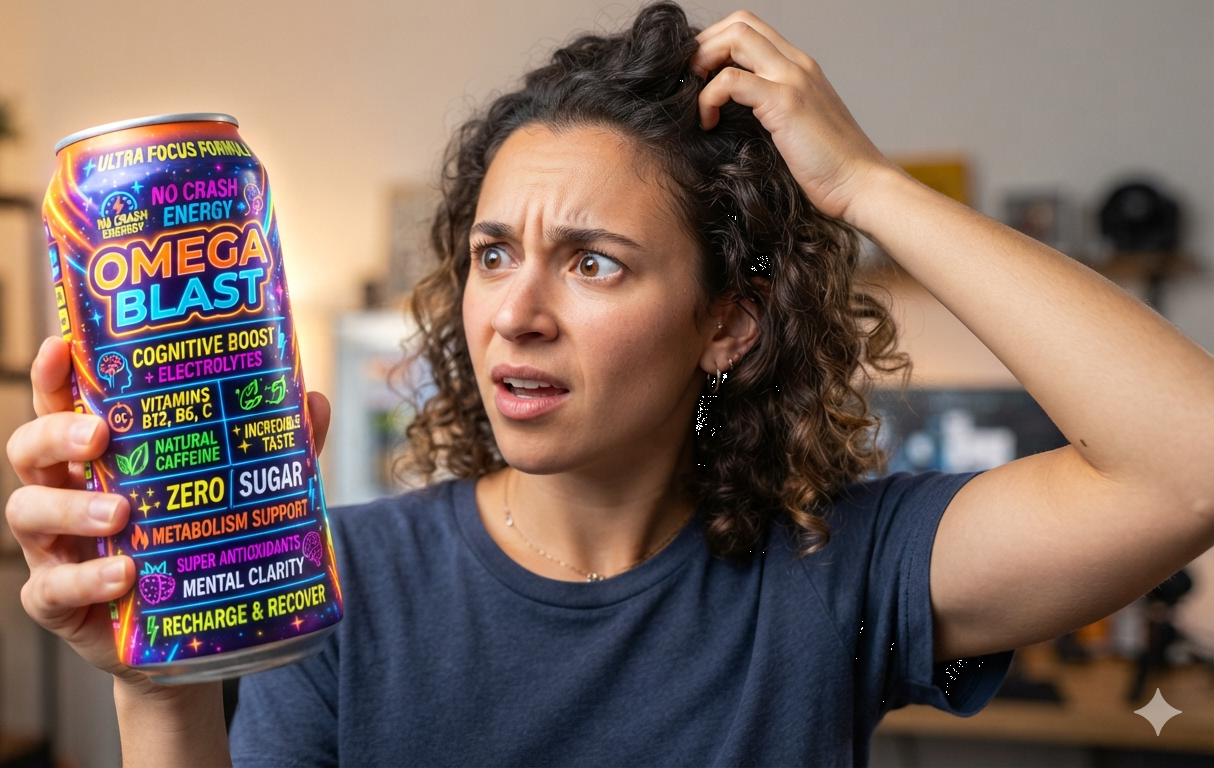
- Own one benefit, loudly. The shelf rewards ownership, not lists. Pick the single claim you can win and make it impossible to miss, rather than listing five that cancel each other out. Try reading 5 claims, your brand, and your flavor in under 2 or 3 seconds; I dare you.
- Benchmark against reality. Hold flavor findability against ~65% correct in ~4.5 seconds. Hold your benefit against a harder question: on a shelf full of competitors making similar promises, can shoppers find you or does the category scatter?
The shelf doesn’t care how good a package looks in the room. It rewards the flavor shoppers can find and the benefit one brand is willing to own.
These findability norms are drawn from The Rich Insights Findability Benchmark spanning 30+ studies and 6,000+ shopper sessions. To benchmark your own package against the category, get in touch.