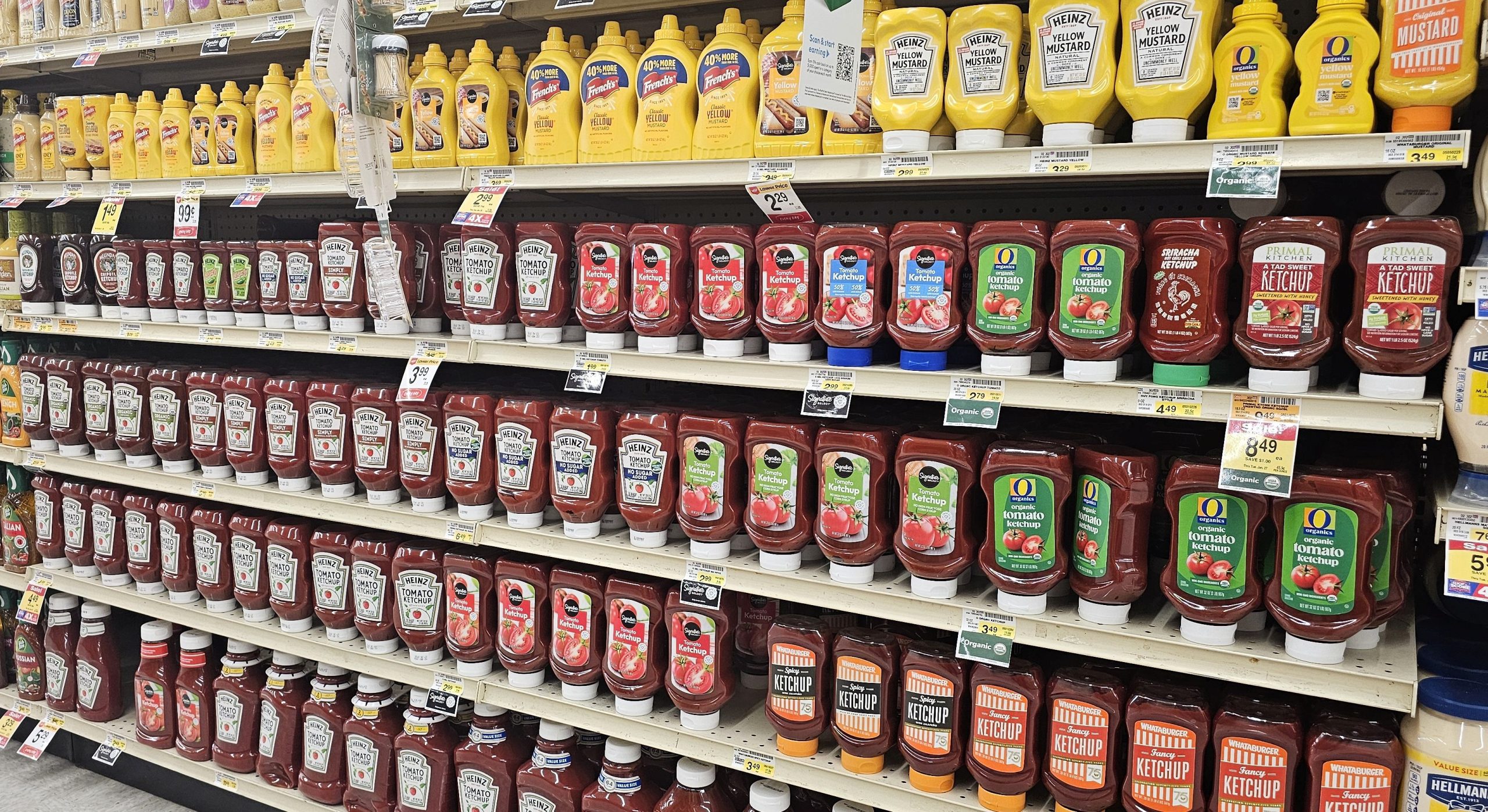
Every brand competes for attention on the shelf.
Some are more successful than others, and some also have clear advantages over others. Advantages like:
-
Better shelf position (middle of shelf)
-
Larger brand presence, which allows for larger brand blocks
Brands without the deepest of pockets need to learn to adapt to the shelf on which they compete for attention, in other, more innovative ways. This can be done through the package design, including colors, images, size, and even shape.
When it comes to shape, there have been a few brands that were so successful at driving attention that they completely changed the entire category, with other brands copying this new, effective shape.
The two that come to mind are Heinz ketchup, back in 2002, when they flipped the bottle upside down on the shelf. This was a little while before I got into package testing, but this new design demonstrated two things:
- Heinz had a clear understanding of one of their consumers’ biggest gripes, which was having to flip the bottle upside down in order to get every drop of the condiment out of the bottle.
- They understood that flipping the bottle upside down on the shelf in a retail setting would be sure to attract attention.
This new design was so successful at addressing these issues that it wasn’t long before other brands started to copy the approach. With a mind towards their own consumers, and re-capturing the lost attention on the shelf from their shoppers.
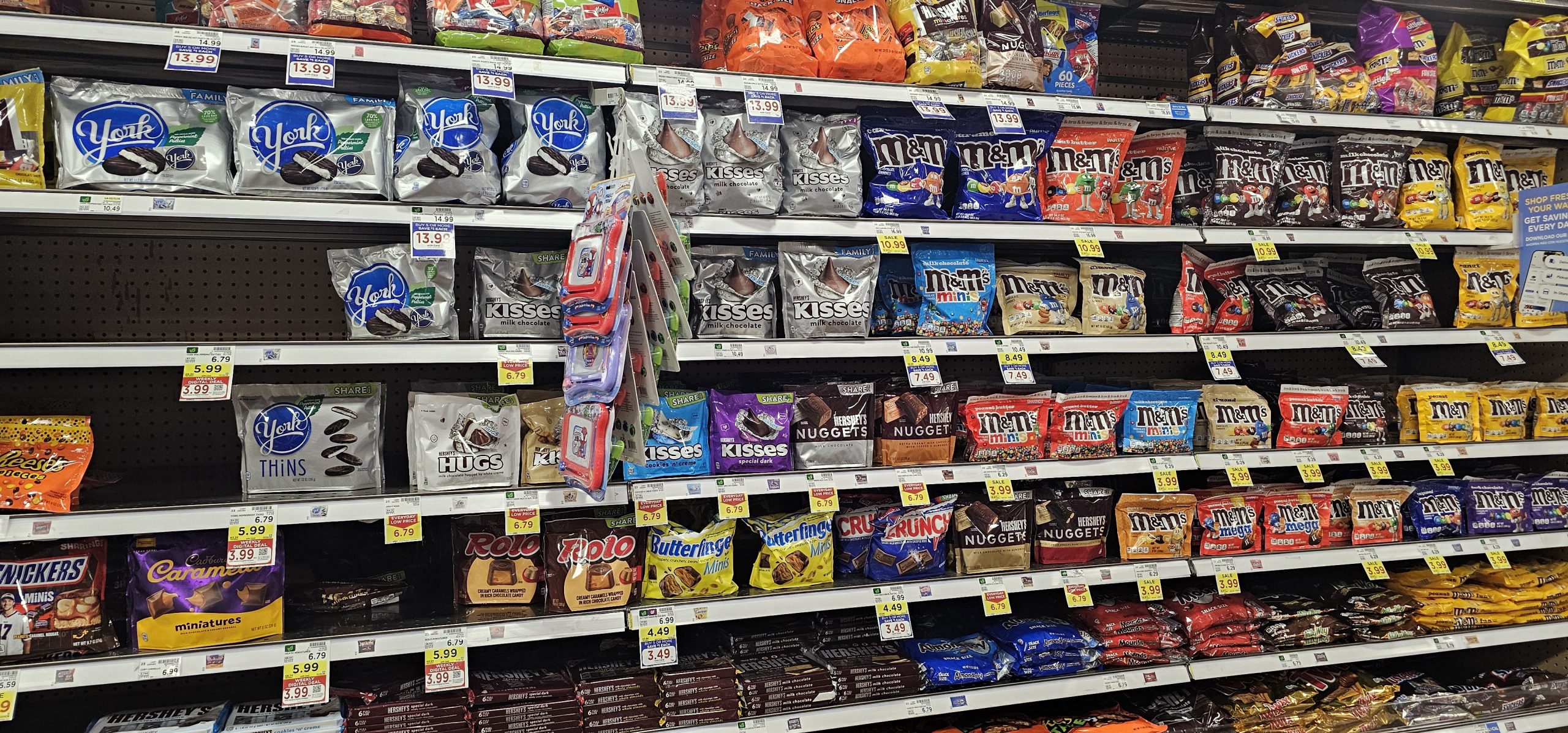
A more recent example is one that I was personally involved with and used eye tracking to test, which was when Hershey moved from laydown shareable bags to stand-up resealable pouches.
When we ran in-person tests with this new design, it boosted attention on the shelf by over 200% and resulted in a higher purchase conversion. Additionally, this 1-2 combination boosted sales by close to 3X in our testing. The eye tracking results were so strong that it was rushed into production, and it started to dominate retail spaces in which it was rolled out. It had such a profound effect on the category that you’re remiss to see any competitor using the traditional laydown style bags anymore, as they have all moved to a similar standup style of packaging.
Brands that think outside the box when it comes to their own category norms can often find success through their shape, their container, or the design itself. Sticking to traditional category norms is a sure way to lose visibility to brands with a better position and larger brand presence, as shoppers have no reason to notice you. Smaller brands need to present shoppers with something unique that will capture attention while also ensuring the shopper understands what the product is and why it should be chosen.